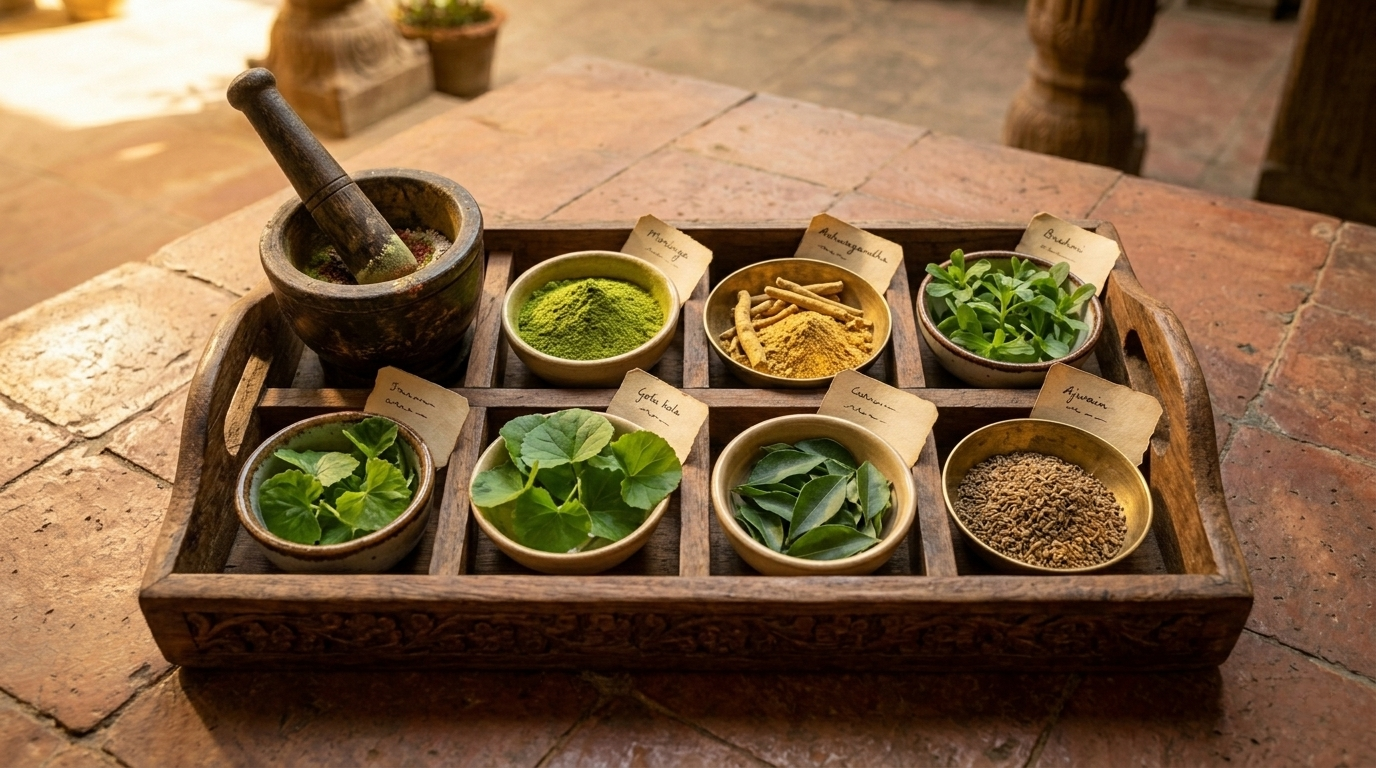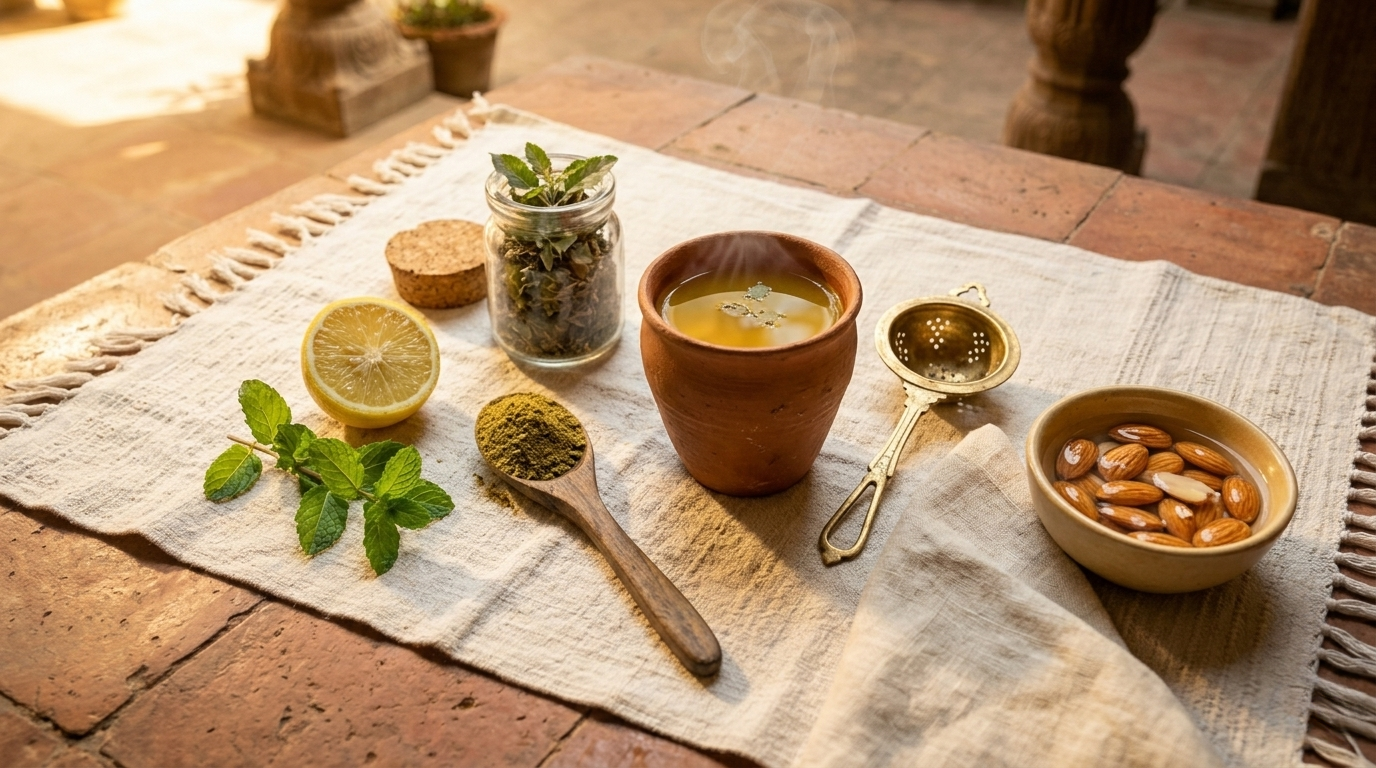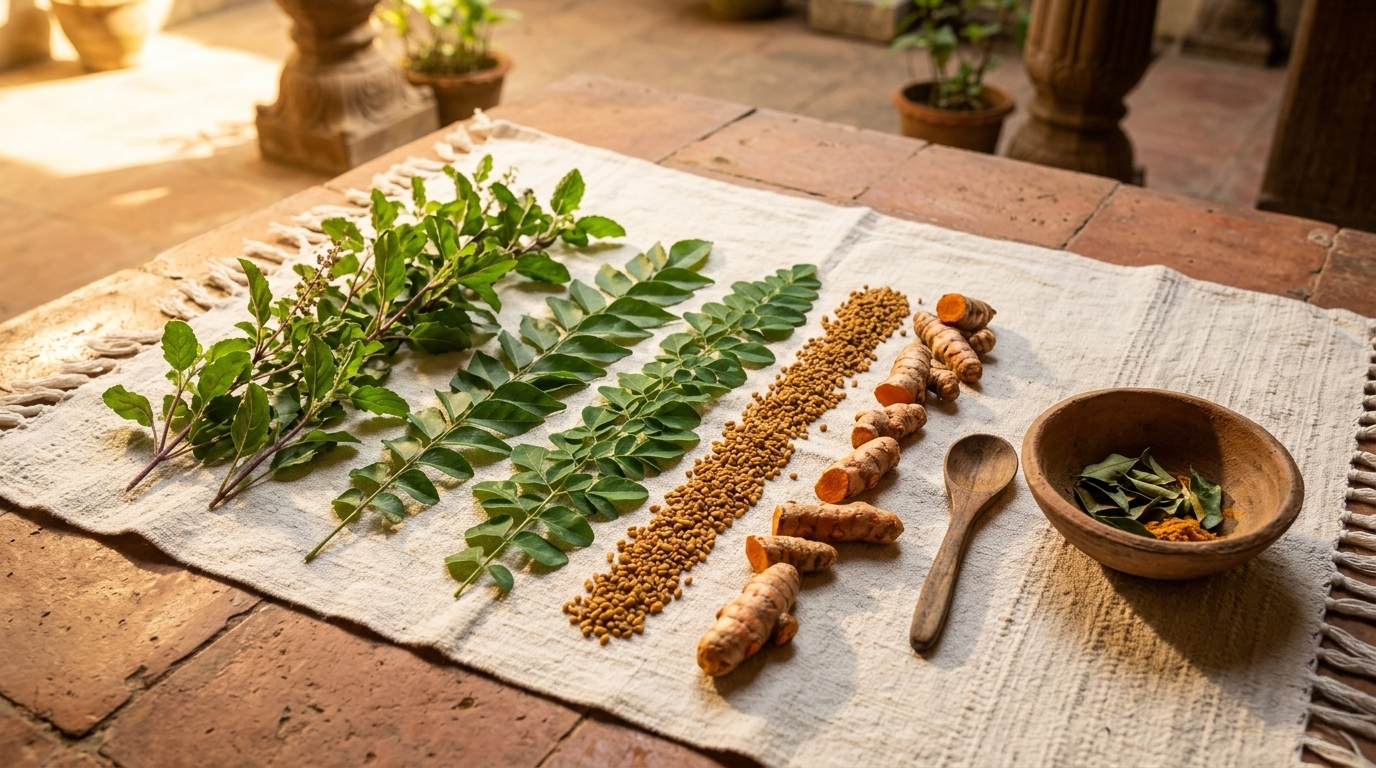

Walk through any old village courtyard in India during the warmer months, and you will see the same quiet ritual unfolding: cotton sheets spread under the sun, herbs and seeds laid out in careful rows, hands turning them gently every few hours. It looks slow. It looks unhurried. And that is exactly the point.
Modern food processing has trained us to value speed. Industrial dryers can strip moisture from a leaf in minutes. Heat tunnels, vacuum chambers and chemical preservatives promise a longer shelf life and a faster journey from field to packet. But somewhere in that rush, something important gets left behind, and your body knows the difference even if the label does not say it.
What happens when herbs meet the sun
Sunlight does more than evaporate water. The slow exposure to natural warmth allows a herb to release moisture at the pace its cellular structure can handle, which means delicate compounds, the very ones responsible for flavour, aroma and nutritional value, stay intact. Vitamins like C and certain B vitamins, sensitive enzymes, volatile oils and antioxidants are particularly vulnerable to high heat. When a tulsi leaf or a curry leaf is dried over two or three days under the sun, those compounds settle gently rather than getting blasted away.
Industrial drying, by contrast, often uses temperatures between 80 and 120 degrees Celsius. Studies on culinary and medicinal herbs have repeatedly shown that high heat reduces phenolic content, antioxidant activity and essential oil concentration. The herb that arrives in a sealed packet may look the same, but its inner chemistry has been quietly diminished.
The taste test you can do at home
If you ever want to feel this difference, try a simple comparison. Take a pinch of sun-dried mint and a pinch of commercially processed mint, crush both between your fingers and inhale. The sun-dried one will release a brighter, sharper aroma almost immediately. The other will smell muted, flat, sometimes slightly papery. Aroma is a direct signal of essential oil retention, and essential oils are where much of a herb’s therapeutic value lives.
This is also why traditional households in India have always kept their own stock of sun-dried herbs and spices. The grandmothers were not being sentimental. They were being precise.
Time as an ingredient
There is a phrase we use often at EcoHerbz: time is an ingredient. It cannot be rushed, and it cannot be replicated. When we sun-dry our ingredients in small batches, we are giving each leaf, each seed, each root the hours it needs to settle into its final form. We turn them by hand, we check for moisture, we pull them in if a cloud passes. It is attentive work, and it is the reason a teaspoon of our product tastes the way it does.
Small-batch preparation matters here too. Large industrial runs cannot afford to slow down for a single tray of herbs that needs more time. A small batch can. That is the freedom of doing things the older way, and that freedom shows up in the final jar.
Why this matters for your daily nutrition
If you are adding herbs to your routine for wellness, you are essentially relying on the active compounds inside them. A daily spoon of moringa, a pinch of ashwagandha in warm milk, a sprinkle of curry leaf powder over rice; these rituals only work if the compounds are still alive. Choosing sun-dried, minimally processed herbs is not about nostalgia. It is about making sure the goodness you think you are getting is actually there.
Clean nutrition is not just about what is left out, like preservatives or colours or fillers. It is also about what is preserved. And nothing preserves a herb quite like the patience of the sun.
A slower promise
At EcoHerbz, every product carries this slower philosophy. From handpicking ingredients to sun-drying, traditional crafting and careful packing, each step is designed to protect what nature already put inside the plant. We are not adding wellness to our products. We are simply not stripping it out.
The next time you reach for a herbal blend, turn the packet around and ask one quiet question: how was this dried? The answer will tell you almost everything you need to know.