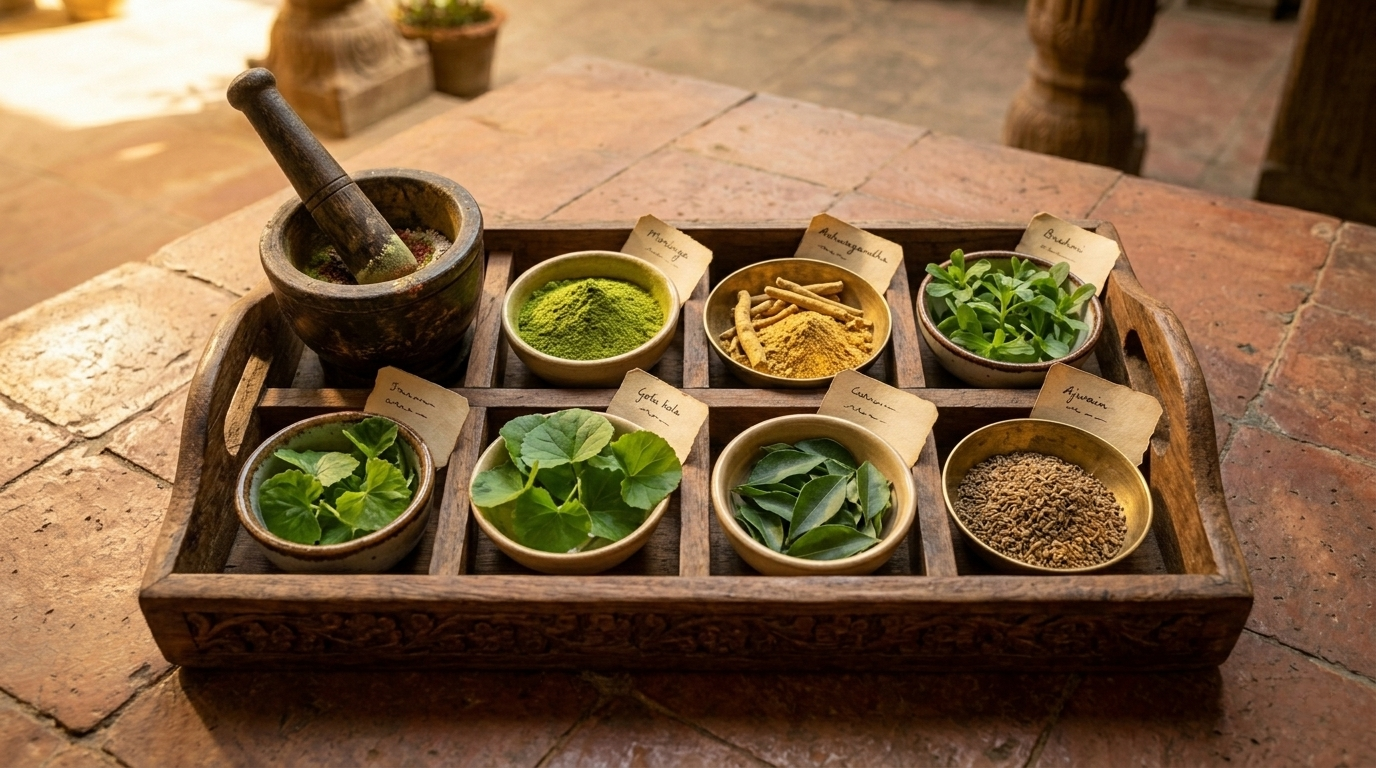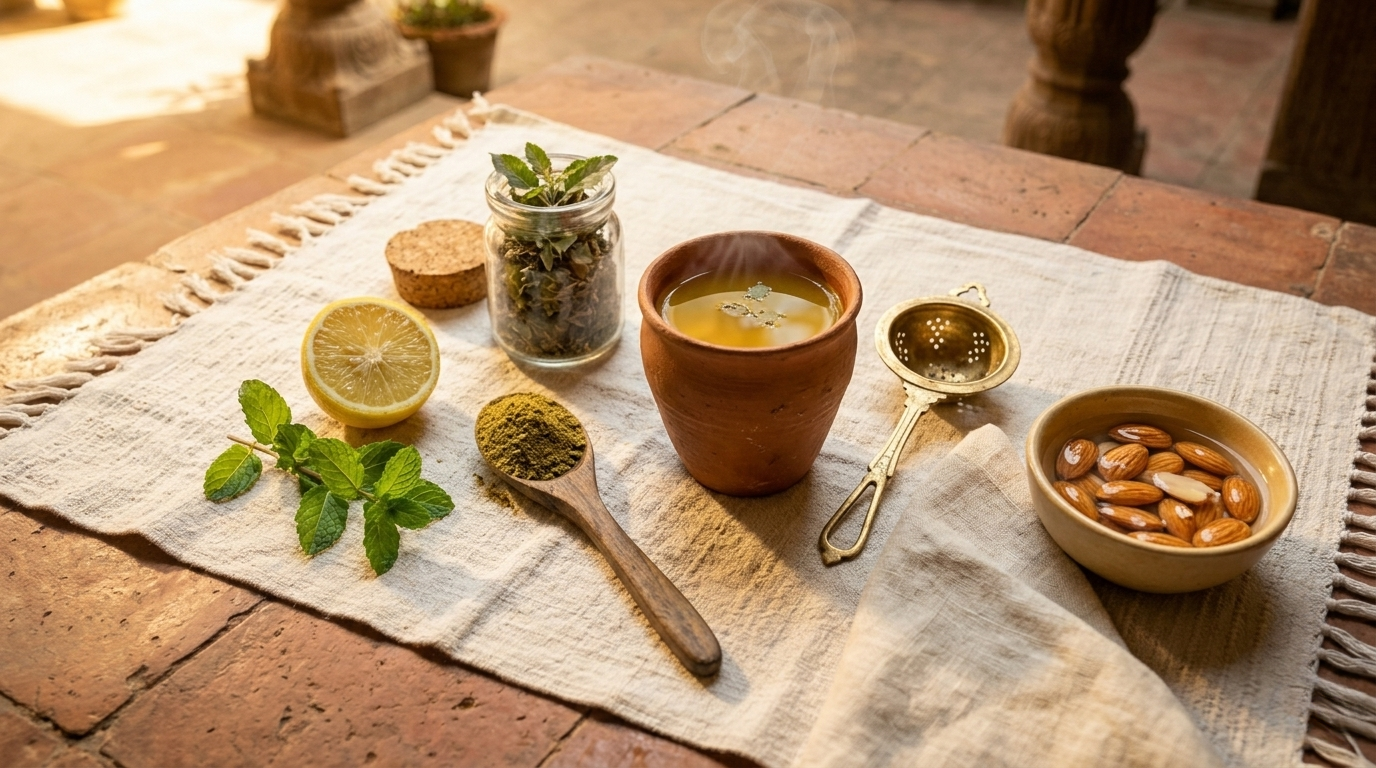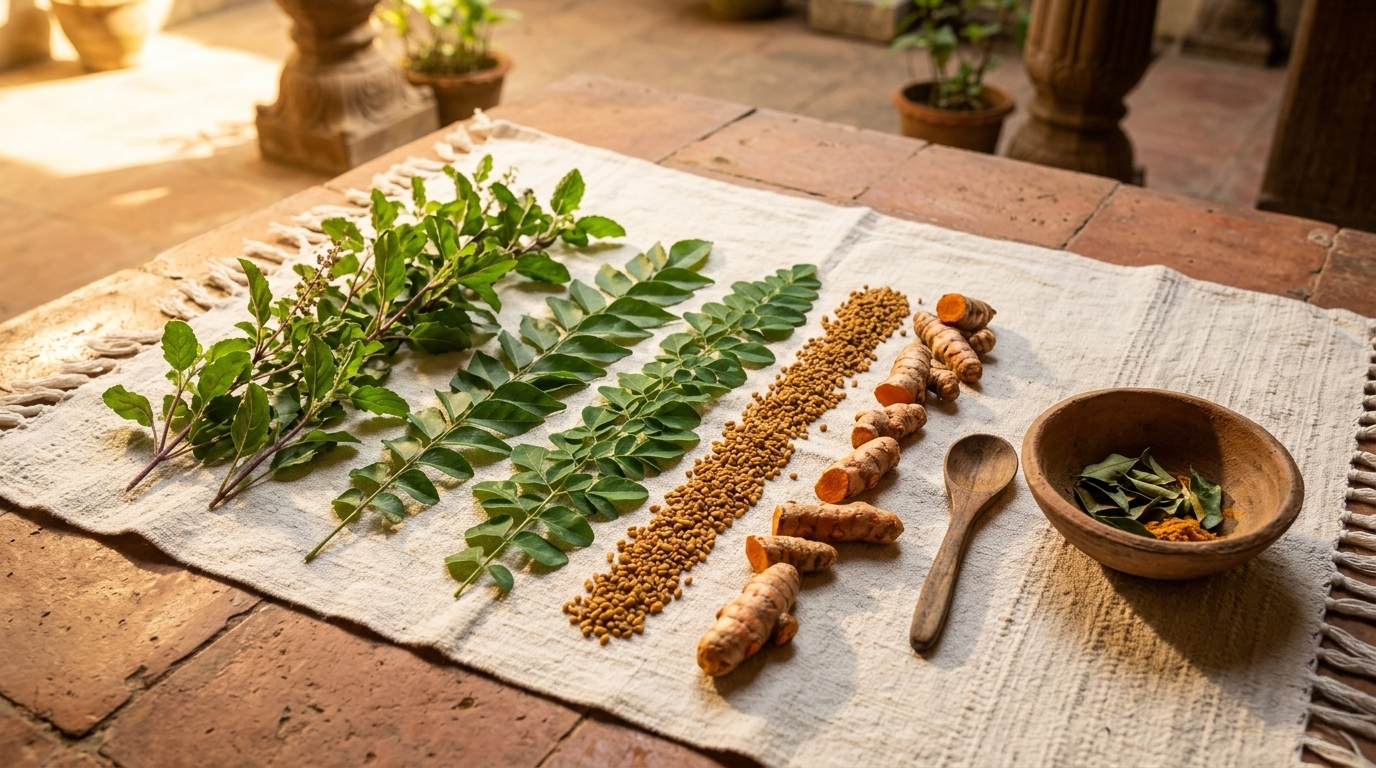

Open most kitchen cabinets in India and you will find the same dependable cast: turmeric, cumin, coriander, ginger, maybe a stray jar of fenugreek. These spices have earned their permanent residency, and rightly so. But the Indian herbal tradition is far wider than the everyday five. There is a quiet pantry of lesser-known herbs that have been part of Ayurvedic and folk wellness for centuries, and most of them have slipped out of modern kitchens for no good reason at all.
If you are interested in expanding your daily nutrition without expensive imports or trendy powders, here are six traditional Indian herbs worth rediscovering.
1. Moringa, the everyday multivitamin
Moringa, or drumstick leaves, is one of the most nutrient-dense plants on earth. Gram for gram, the leaves contain meaningful amounts of vitamin C, calcium, iron, potassium and protein. Indian villages have used moringa in dals, sambars and chutneys for as long as anyone can remember.
The simplest way to bring it back is as a powder, half a teaspoon stirred into warm water in the morning, or sprinkled over rice and dal. The taste is grassy and mild, and the body absorbs the nutrients well because it is real food, not a synthesised pill.
2. Ashwagandha, the calm in a jar
Ashwagandha has had a recent global moment, but its roots in India go back over three thousand years. Classical Ayurvedic texts list it as a rasayana, a herb that supports vitality, steadies the nervous system and helps the body adapt to stress.
Traditional use is simple. Quarter to half a teaspoon of the powder in warm milk, taken at night with a touch of honey. It is not a sleeping pill and it does not work overnight. But used consistently for a few weeks, it tends to soften the edges of a stressful life.
3. Brahmi, the herb for thinking
Brahmi grows in the marshy areas of South India and has long been associated with memory, focus and mental clarity. Students in traditional Indian schools were given brahmi preparations during exam season. Modern research has begun to support what classical texts have said for centuries: brahmi appears to support cognitive function and reduce mental fatigue.
It can be taken as a powder mixed in warm water or ghee, or brewed as a mild tea. The taste is slightly bitter, which is part of its character, not a flaw to be hidden.
4. Gotu kola, the herb of longevity
Known in India as mandukaparni, gotu kola is one of the most respected herbs in both Ayurveda and traditional Sri Lankan medicine. It is associated with circulation, skin health and a calm but alert mental state. Old wellness traditions even called it the herb of longevity, partly because of its supportive effect on connective tissue and circulation.
A small handful of fresh leaves in a salad, or a pinch of dried powder in a smoothie, is enough. It does not need to be dramatic to be effective.
5. Curry leaves, the underestimated everyday
Curry leaves are not exactly forgotten, but they are deeply underused. Most of us pluck them out of our food without a thought. In reality, curry leaves are rich in iron, support digestion, and have been traditionally used to help with hair and skin health.
The trick is to actually eat them. Crisp them up in your tadka and chew them along with the dal. Or dry and grind a batch into curry leaf powder, and sprinkle it over rice with a drizzle of sesame oil. It is one of the simplest, most south Indian comforts you can build into your week.
6. Ajwain, the gentle digestive
Ajwain, or carom seeds, is the quiet hero of Indian digestion. A pinch chewed after a heavy meal, or a teaspoon boiled in water and sipped warm, eases bloating and supports gut comfort. It also adds a beautiful sharp note to parathas, biscuits and savoury baked goods.
In an age of expensive probiotics and gut-health programmes, this thirty-rupee jar in your kitchen often does more than people realise.
Bringing the old pantry back
What ties these herbs together is not just their individual benefits. It is the philosophy behind them. Indian wellness has always treated food and medicine as overlapping circles, not separate categories. A meal was never just fuel. A spice was never just flavour. Each ingredient quietly carried something forward.
Bringing these herbs back into daily use is not about following a new wellness trend. It is about restoring something that was always meant to be there. A small jar of moringa next to your turmeric. A pinch of ashwagandha in your bedtime milk. A few brahmi leaves in your weekend tea.
This is the spirit EcoHerbz was built around. Honest, traditional, small-batch herbs prepared the way they were always meant to be prepared, so that the old pantry has a place in your modern kitchen, exactly where it belongs.